How it works
Multiple plates, one show
On iPhone, iPad, Mac and the web, work with up to three plates. Edit each plate separately, stack them to blend their light, or arrange them side by side. The Apple TV edition uses a single plate.

- 1dish at 0°
- 2dish at 138°
- 3dish at −97°
Each dish is turned to its own angle, so the three images land on the disc at different angles and add where they overlap.
Your hands
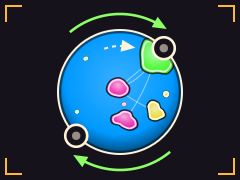
Turn
two-finger twist
The dish turns with your fingers and the liquid lags behind. Let go mid-turn and the dish keeps turning.
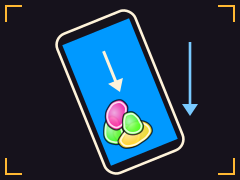
Tilt
tip the phone
Oil runs toward the low edge. Hold the phone still and the dish settles level in about 2 seconds.
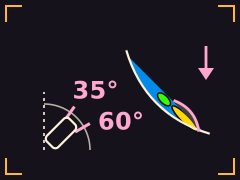
Lean
tip past 35°
Tip harder and the top plate leans on the low rim, pressing deeper as you tip, fully at 60°.
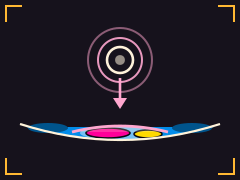
Press
long-press
The glass pushes the film thin under your finger. Lift, and the liquid flows back.
Optical focus
Adjust Focus in Scene and look to sharpen the outlines or let the bright lines of gathered light spread out.
Materials

01 OilFloats in the water and forms lenses that bend the light. Carries dye.Refractive index 1.48

02 InkDye carried in the water. It colors the light by absorbance: magenta over cyan gives blue.Water: refractive index 1.36
In the studio Study 01
A new hand in the liquid.
The next Protoplasm gives the Artist another way to play: draw oil together, ease it apart, then wait for the shape to unfold.
The light show began with hands on glass. We’re taking that idea into invented forces: a short pull, a gentler push, and a long rest. The liquid carries the gesture on.
In development for an upcoming release. Shape and timing may change.
- 01 Pull
- 02 Push
- 03 Rest
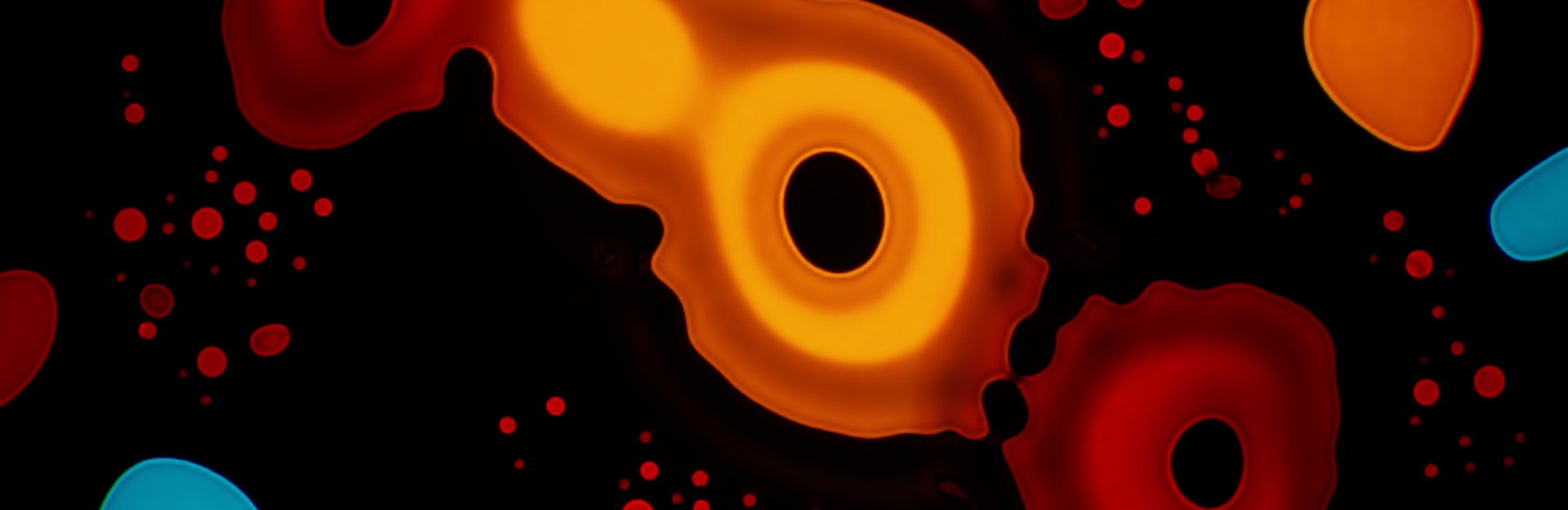
A pale opening stretches into an S-shaped channel at the lower edge. The nested ring above it stays in place.
Silent, controlled study · October 2026.
Sound and gesture
Light, played by ear.
Beat accents in the glass, light that breathes with the bass, and the Artist’s response to a quiet break. Advanced audio is available on iPhone and iPad with Operator, our optional one-time paid upgrade.
Explore advanced audioHistory
Pressed Between Glass
How a classroom projector, a dish of mineral oil and a bottle of dye became the light show of the 1960s ballrooms, told with working demos of the physics Protoplasm is built on.
Read the essay